
What Hershey’s Brand Refresh Teaches Us About Evolving Without Losing Your Identity

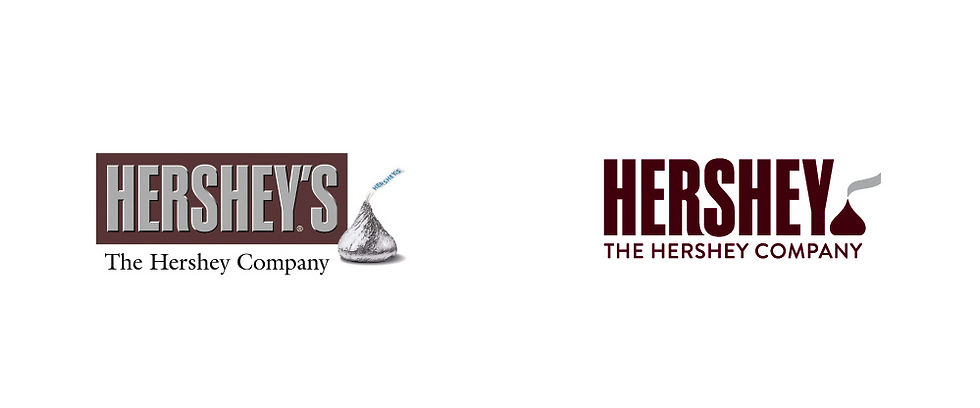
When a brand that’s been around for more than 130 years decides it’s time for a refresh, it’s never just about visuals. Hershey’s recent brand update is a great example of how legacy brands can evolve in a way that strengthens relevance without sacrificing identity. What makes this refresh particularly compelling is not how dramatic it looks, but how intentional it was.
According to Hershey’s own team, this refresh took years and was rooted in internal alignment, purpose, and a deep understanding of what the brand represents today, not just historically. And that’s where the real lesson lives.
Evolution Doesn’t Have to Mean Disruption
There’s a common misconception in branding that in order to “stay modern,” you have to constantly reinvent yourself.
New platform? New voice.
New trend? New visuals.
New audience? New positioning.
But Hershey’s took the opposite approach.
They didn’t reintroduce themselves to the world as something entirely new. Instead, they refined how their identity shows up in today’s culture while protecting the emotional and historical foundation that made the brand recognizable in the first place.
That’s not reinvention. That’s evolution done strategically.
The Power of Knowing What Should Stay the Same
One of the most overlooked aspects of strong brand strategy is knowing what not to change.
Hershey’s refresh was guided by a clear sense of its purpose and values, not just aesthetic trends. Their work centered on preserving the warmth, joy, and goodness associated with the brand while expressing those ideas in a more contemporary, flexible, and scalable way.
This kind of clarity is what allows brands to:
Modernize without alienating loyal customers
Expand into new channels without losing consistency
Scale while staying recognizable
It’s not about resisting change. It’s about being selective with it.
Why So Many Growing Brands Get This Wrong
In working with early-stage and scaling brands, one pattern shows up again and again: constant change driven by uncertainty, not strategy.
A logo gets updated because it “feels old.” A tone of voice shifts because a competitor is doing something louder. A full rebrand happens because engagement dipped for a few weeks. Over time, these decisions don’t make a brand more dynamic, they make it harder to understand.
When everything changes, nothing stands for anything. Hershey’s shows that long-term brand strength doesn’t come from reacting quickly. It comes from building a core so clear that change becomes intentional rather than reactive.
Relevance Comes From Expression, Not Identity
One of the smartest things Hershey’s did was focus not on redefining who they are, but on redefining how that identity is expressed.
That includes:
More flexible visual systems
Brighter, more contemporary design
Clearer alignment across their portfolio of brands
A renewed focus on purpose-driven storytelling
The identity didn’t change. The expression did, and that distinction matters, becuase relevance isn’t about abandoning what people already connect with. It’s about making that connection feel current.
What Founders and Brand Builders Can Take From This
You don’t need to be a 130-year-old company to apply this thinking.Whether you’re building a startup, a personal brand, or a growing business, the same principles apply.
Before you change anything, ask:
What about my brand is non-negotiable?
What do people already associate me with?
What emotional or functional value do I consistently deliver?
Then ask:
Where does my brand need to evolve in order to stay relevant?
How can my messaging, visuals, or platforms better reflect who I already am?
Strong brands aren’t built by changing everything when something stops working. They’re built by understanding what should remain stable and what should remain flexible.
The Real Lesson From Hershey’s
Hershey’s didn’t refresh their brand to look new. They refreshed it to stay meaningful, and that’s the difference between branding as decoration and branding as strategy.
At Zema, this is the lens we bring to brand and content work. Not just how something looks, but why it looks the way it does, who it’s meant to connect with, and how it supports long-term growth rather than short-term attention because the brands that last aren’t the ones that chase every trend.
They’re the ones that know exactly who they are, and how to show it in ways that continue to resonate.



Comments